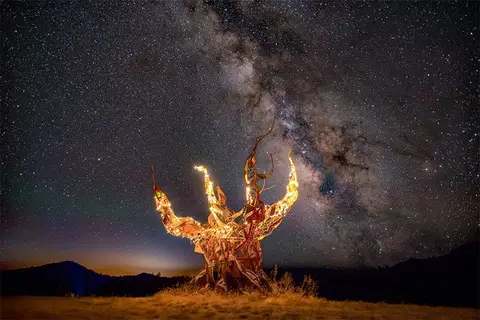
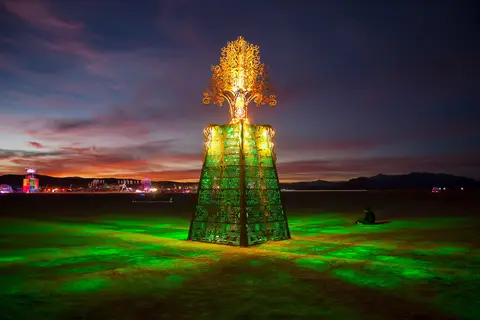
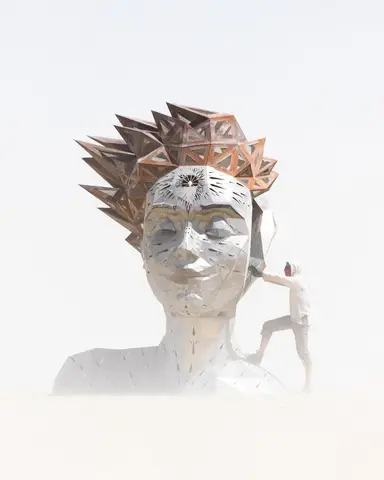
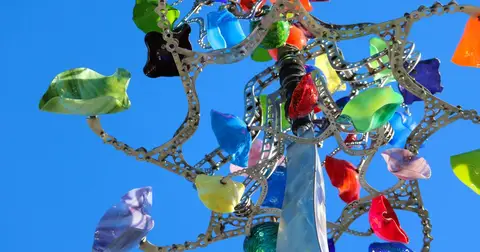
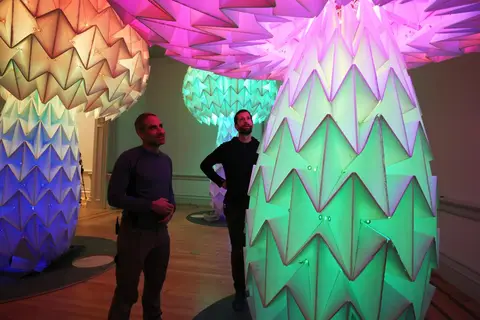
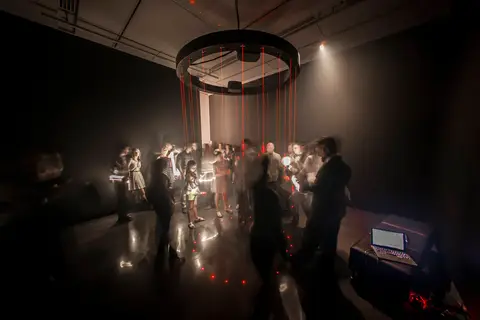
A Bay Area artist collective using monumental sculpture projects to share skills and develop a creative community. Its work includes tree forms, modular creatures and responsive sculpture gardens.
Project details & references
Practice
monumental sculpture, collaborative fabrication
Materials in documented works
steel, patina, stained glass, light
Project references
The Exquisite Corpse · Scriptorium · Charismatic Metafauna
Documented contexts
2021 festival presentation; 2018 archive credit to Gray Davidson and Majorelle Arts
Mara Greenberg is a named co-artist on collaborative fire sculptures and participatory installations documented by Burning Man. The 2017 archive credits her among the team for Fire Ancestor, a rotating steel-pipe sculpture with flame effects. The Pipe Gorgon, listed in 2022, credits Greenberg with Alan Becker, Marc Greenberg, Sammie Koehn, Nick Angel and the Frogma Collective; its description presents a propane-fueled instrument with playable flame-whistle keys. Alight, documented in 2023, combines a traversable bird-form bridge with flame effects. A collaborator’s project page names Greenberg, Becker, Trey Watkins and Cameron Brown as its lead artists. The same archive of projects credits her as a lead on No Place Like Home in 2019. This profile records her individual contribution while preserving collective authorship and unknown current studio location.
Project details & references
Practice
fire art, large-scale sculpture, collaborative installation
Project references
Fire Ancestor · No Place Like Home · The Pipe Gorgon
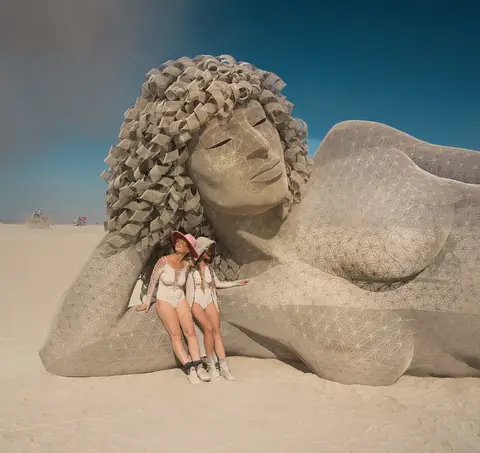
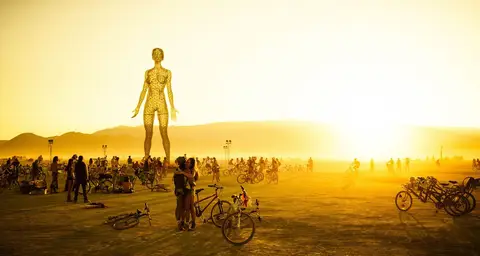
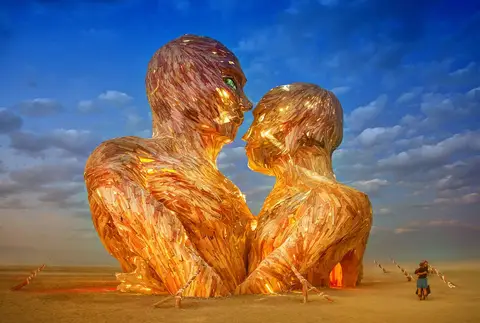
Cochrane creates monumental figurative sculptures, including The Bliss Project, a series developed with model Deja Solis and a volunteer fabrication team for Burning Man and subsequent public settings.
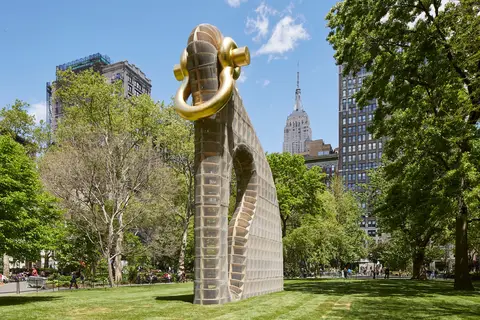
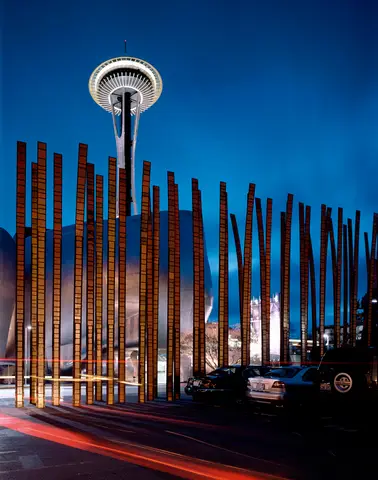
Martin Puryear is a sculptor whose documented public work includes the bronze Bearing Witness, the temporary installation Big Bling, and the brick structure Lookout. These projects connect material craft with large public and landscape settings.
Project details & references
Practice
sculpture, public art
Materials in documented works
debarked western red cedar (posts and framing), clear, heart white oak (decking, handrails, and benches), clear, heart redwood (canopy), stainless steel mesh
Project references
Big Bling · Bearing Witness · Lookout
Documented contexts
Temporary monumental sculpture in Madison Square Park; Art in Architecture commission in Washington, D.C.
Martin Taylor makes faceted metal sculptures under the Chromaforms name, bringing digital modeling and hand-shaped fabrication together in forms inspired by origami. His biography identifies a base in Paris and California and a background in mechanical engineering. The large-sculpture portfolio includes Cosmic Voyager from 2018, The Seed of Dreams from 2022 and Touch the Sky from 2023, using stainless steel, weathered steel and light in different combinations. His CV separately records Burning Man honoraria for these projects and exhibitions or installations at Canal Convergence in Scottsdale, downtown Vacaville and San Francisco’s Big Art Loop. Those CV entries establish presentation history at the program level; they do not identify which physical edition appeared at every venue. Chromaforms is Taylor’s practice name, not a second artist identity.
Project details & references
Practice
metal sculpture, light sculpture, large-scale installation
Project references
Cosmic Voyager — with The Chromaforms Collective · The Seed of Dreams — with Chromaforms Art Collective · Touch the Sky
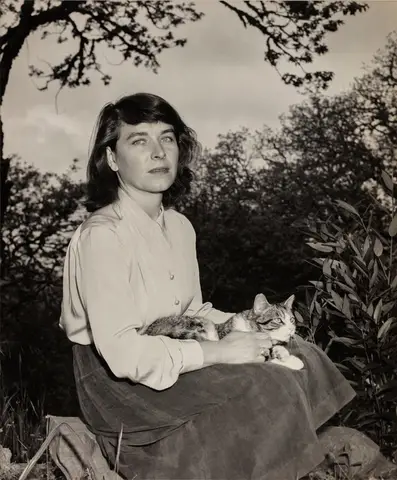
Mary Fuller McChesney (1922–2022) was a sculptor and art historian whose career joined ceramic experimentation with public commissions. SFO Museum documents her California Faience apprenticeship, wartime welding experience and later work at Sonoma Mountain. During the 1970s she developed larger public sculptures by carving a slowly drying mixture of cement, sand and vermiculite. San Francisco’s civic collection records Dos Liones for San Francisco General Hospital, animal sculptures and an Untitled ensemble for Portsmouth Square, and Earth, Air, Sea for the Westside Pump Station. The collection identifies cast stone, cast concrete and colored mosaic among these works’ materials. This historical profile supports research into civic sculpture; the locations are documented commission or collection sites, with present display, relocation and access unconfirmed.
Project details & references
Practice
public sculpture, ceramic sculpture, concrete sculpture
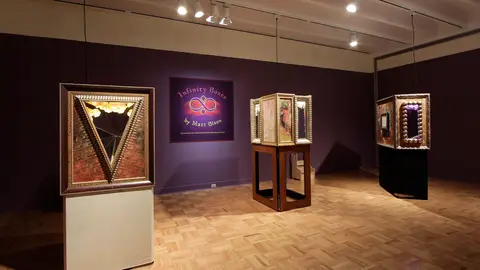
Matt Elson’s Infinity Boxes use mirrors, color and light to make perception a shared experience. The Memorial Art Gallery at the University of Rochester exhibited nine boxes from October 2014 to January 2015. Its account describes viewers looking in from opposite sides and documents Infinity Box No. 2: You and Me Together, dated 2012. Elson’s later Burning Man references extend the practice into other configurations. The 2018 archive lists The Borromean Knot (Infinity Ship No. 1) with Infinite Community; the 2024 entry TANZER credits Elson alongside Sterling Roth, Bill Clark, Shlomo Zippel, Brian Pinkham and Maff Scott. Those entries preserve collective authorship and event-registration context. They do not establish a current studio base or independently confirm the completion of every proposed configuration.
Project details & references
Practice
interactive installation, mirror and light installation, immersive art
Project references
Infinity Box No. 2: You and Me Together · The Borromean Knot (Infinity Ship No. 1) — with Infinite Community; event listing · TANZER — with Sterling Roth, Bill Clark, Shlomo Zippel, Brian Pinkham and Maff Scott; event listing
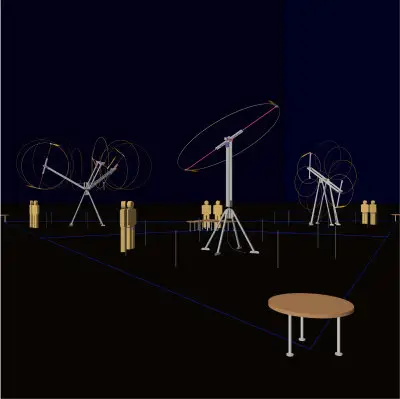
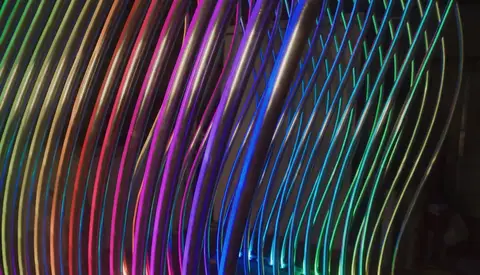
McConnell develops sculpture through repetition and transformation of forms, including motion-responsive light in Evolution Field.
Project details & references
Practice
sculpture, interactive light installation
Project references
Evolution Field · Canopy
Documented contexts
Burning Man 2022; development and pre-event testing; Artist account of audience research and iterative development
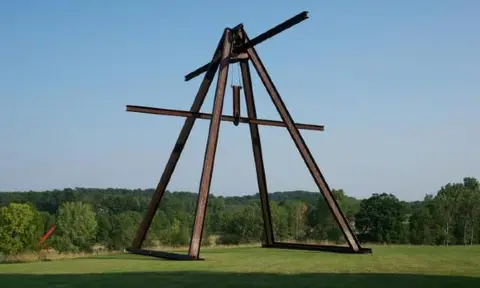
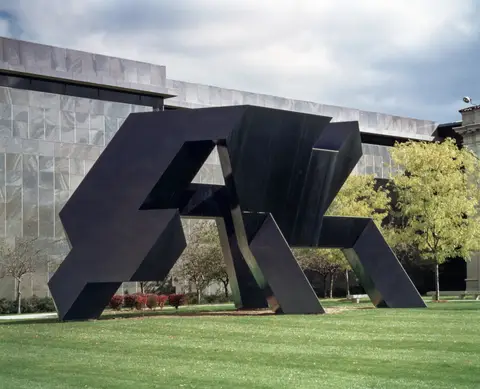
Verified artwork imageImage: tonysmithestate.com ↗Artwork: Tony Smith. Photographer not identified in the reviewed source. (as credited at source)unknown
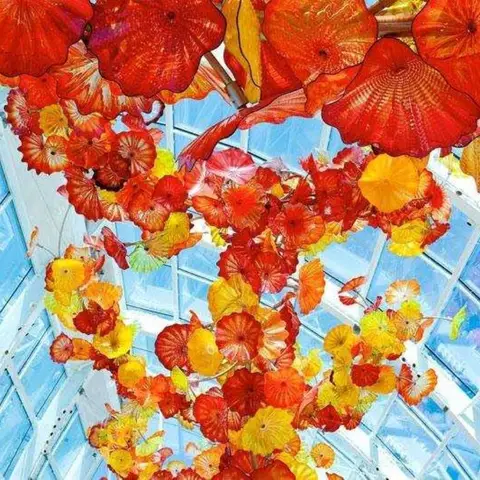
Matthew Schultz is a monumental sculptor and founder of The Pier Group. His studio documents large collaborative environments and sculptures, including The Space Whale, a stained-glass humpback mother and calf credited with Andy Tibbetts and Android Jones. It first appeared at Burning Man in 2016; the artist’s page documents its later downtown Reno setting. The Pier began in 2011 and gained the ninety-foot Spanish galleon La Llorona in 2012, with the studio also recording a 2017 appearance. Embrace was a seven-story collaborative work for Burning Man 2014. Head Maze was designed as a four-story, eighteen-room environment, but the studio explicitly states that it was only partially installed in 2019. Completion of its proposed permanent version is not established.
Project details & references
Practice
monumental sculpture, installation, stained glass
Project references
The Space Whale · The Pier and La Llorona · Head Maze
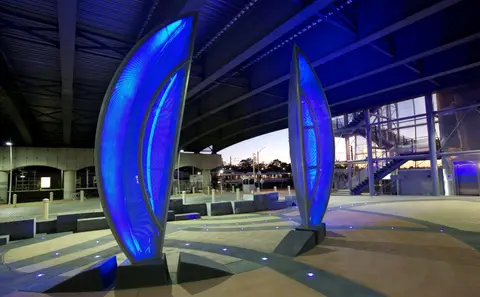
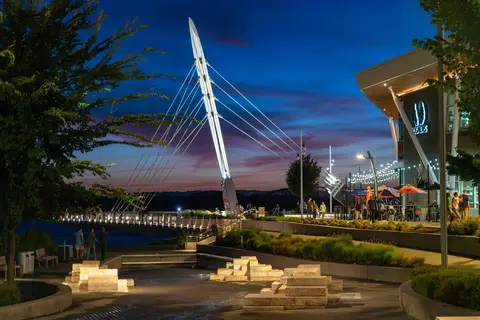
Verified artwork imageImage: thewaterfrontvancouverusa.com ↗Artwork: Larry Kirkland. Photographer not identified in the reviewed source. (as credited at source)outdoor
Maya Lin works across art, architecture, and landscape. Documented U.S. installations include Storm King Wavefield, an earth-and-grass work, and Ghost Forest, a temporary installation of dead Atlantic white cedars in Madison Square Park.
Project details & references
Practice
landscape art, installation, public art
Project references
Storm King Wavefield · Ghost Forest
Documented contexts
Earth-and-grass installation at Storm King; Conservation and visitor access for a living earthwork
Explore sculptures that physically move: visitor-activated mechanisms, changing forms and wind-driven installations. Compare documented projects, understand how motion shapes the encounter, and identify the site and maintenance questions to resolve with an artist.
Find installations that make listening, musical participation or sound-responsive light part of a place. Compare playable works and spatial compositions, then plan how the experience will share space with visitors, neighbors and everyday activity.