Research notes for project planning
What the project record tells us
Madison Square Park canopy installation
A canopy can redirect attention to a path
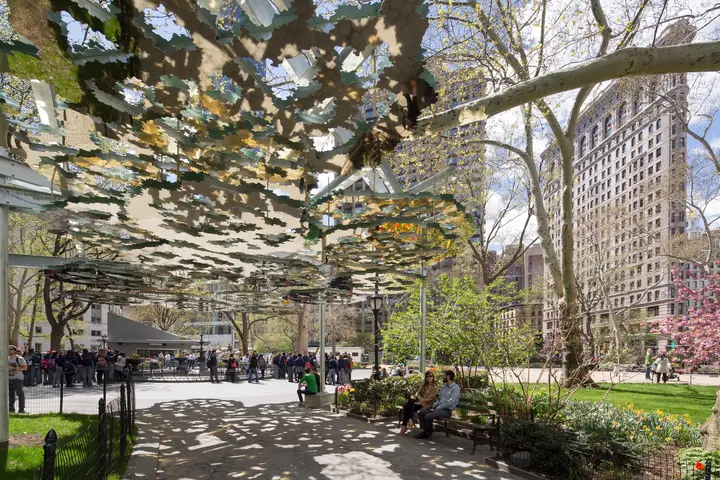
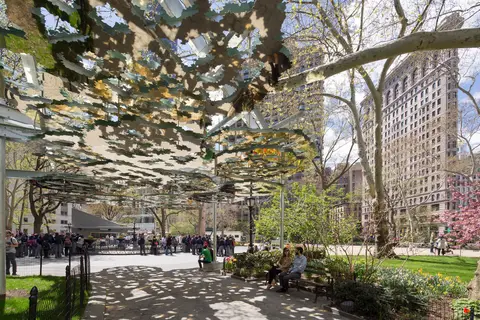
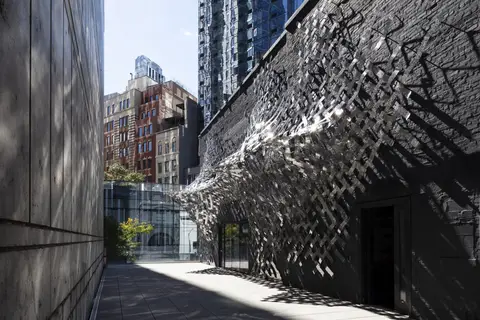
Fata Morgana placed perforated, reflective canopies over pathways in Madison Square Park in 2015. The installation used an overhead surface to make changing light and visitors’ movement part of the work. Its location across routes through the park offers a different commissioning question from placing a single sculpture in an open lawn. The everyday path itself becomes the viewing sequence. Which existing routes, trees and seasonal conditions should guide the placement of an artwork designed to be encountered while walking?
Madison Square Park Conservancy — Fata Morgana ↗ · Reviewed 2026-10-10
For your project briefWhich routes, trees and seasonal conditions should guide placement?
Big Art Partners planning prompt Olympic Sculpture Park bridge
An artwork can be part of a crossing
Seattle Cloud Cover integrates laminated glass and photographic imagery into a bridge at Olympic Sculpture Park. The museum’s collection record dates it to 2004–2006 and describes a work experienced through changing views and light. As a commissioning precedent, it connects an artwork’s material decisions to infrastructure that people use to reach another place. Coordination needs to begin while that infrastructure can still accommodate the artistic proposal. Which bridge, glazing and maintenance decisions should be resolved jointly by the artist and the building team?
Seattle Art Museum — Seattle Cloud Cover ↗ · Reviewed 2026-10-10
For your project briefWhich decisions should the artist and building team resolve jointly?
Big Art Partners planning prompt MASS MoCA multi-level gallery
Different levels can produce different landscapes
MASS MoCA describes Black Sun as an installation whose suspended elements change character between views from below and from the mezzanine. The same work can appear atmospheric or landscape-like depending on the viewer’s position. That precedent suggests mapping available viewpoints before assuming a single preferred photographic angle. An accessible route may reveal one aspect while another level reveals something different. How should a commission use those differences, and what information would help visitors understand that the changing encounter is part of the work?
MASS MoCA — As Above So Below ↗ · Reviewed 2026-10-10
For your project briefHow should the commission use different viewpoints?
Big Art Partners planning prompt