Research notes for project planning
What the project record tells us
Campus Skyspace linked to music and performance
A Skyspace with a performance brief
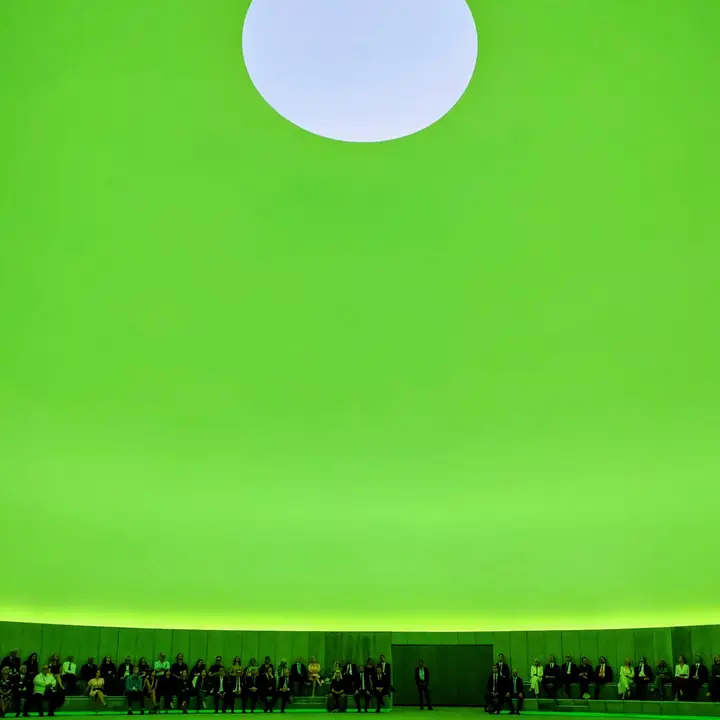
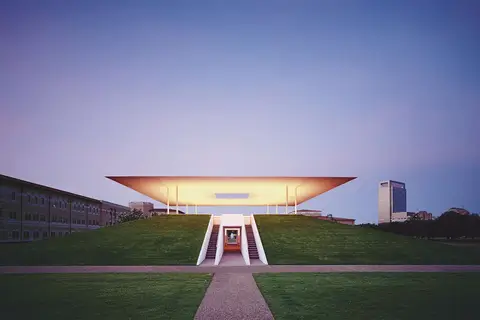
Rice describes Twilight Epiphany as a 2012 Skyspace with seating on two levels and acoustic engineering for performances and the university’s music community. The project therefore combines a changing light experience with a specific institutional use. For BAP, the precedent supports an early conversation about whether an installation is primarily contemplative, performative, or expected to serve both roles. Those choices affect how an audience enters, waits, sits, and listens, and how an operator schedules activity around the work’s intended light conditions.
Rice University — Twilight Epiphany ↗ · Reviewed 2026-10-10
For your project briefHow would performance programming coexist with the intended viewing of sky and light?
Big Art Partners planning prompt Rooftop commission shaped by a campus brief
Protecting the view beyond the object
The Color Inside was developed for a rooftop at the University of Texas at Austin and opened in 2013. Landmarks connects its quiet-reflection purpose to student input and describes height restrictions that protect the view of the sky. That extends the commission’s concerns beyond the enclosure itself. BAP can use this precedent to ask whether future construction, rooftop equipment, or changing campus uses could alter the work’s central experience, and whether those surrounding conditions can be documented before the project is selected.
Landmarks — The Color Inside ↗ · Reviewed 2026-10-10
For your project briefWhat surrounding development controls would be necessary to preserve the intended sky view?
Big Art Partners planning prompt Artist account of adapting an existing building
An aperture is also a building intervention
In MoMA PS1’s interview, Turrell recalls the substantial physical work required to open the roof for Meeting, including equipment brought in to break through concrete. He also explains how interior illumination changes the way the sky’s color is perceived. Together, these details show why a Skyspace should be discussed as both an architectural intervention and a perceptual arrangement. BAP’s early review could distinguish what the building can accommodate from what the artist’s lighting and viewing conditions require, before a concept is presented as straightforward.
MoMA PS1 — James Turrell on Meeting ↗ · Reviewed 2026-10-10
For your project briefWhich structural and lighting constraints should be resolved before evaluating a proposed aperture?
Big Art Partners planning prompt