Research notes for project planning
What the project record tells us
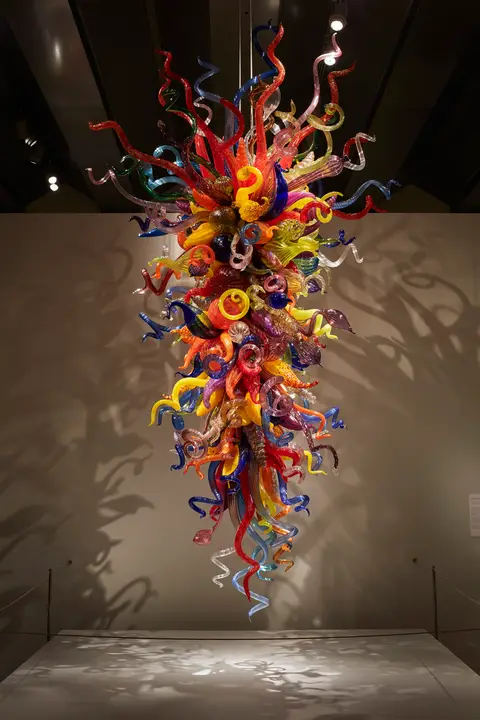
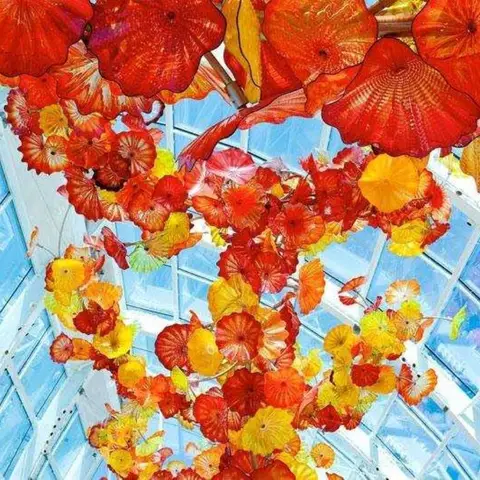
2012 sculpture within the Chihuly Garden and Glass destination.
An installation belongs to its exhibition setting
The official Chihuly Garden and Glass account documents the 2012 Glasshouse Sculpture within a Seattle destination combining interior displays, architecture and garden settings. For a cultural-venue buyer, this is a precedent for planning a sequence of experiences around an installation. A comparable proposal should explain the relationship between the work, daylight, visitor movement and its architectural enclosure. The scope also needs to distinguish the artwork itself from exhibition infrastructure and interpretation, so installation, cleaning and future changes have clear responsibilities.
Chihuly — Chihuly Garden and Glass ↗ · Reviewed 2026-10-10
For your project briefWhich exhibition and architectural systems support the artwork?
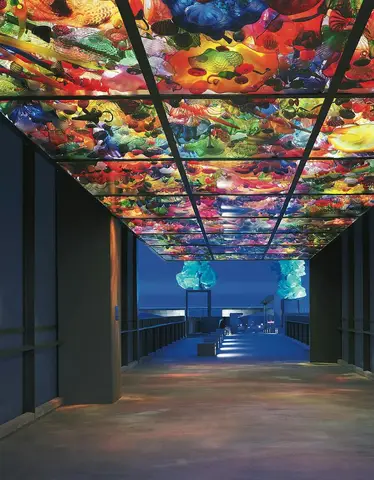
Big Art Partners planning prompt 2002 collaborative public work; City of Tacoma ownership retained.
A bridge links art components and civic ownership
The Museum of Glass identifies Tacoma’s Bridge of Glass as a 2002 work by Dale Chihuly and architect Arthur Andersson, in the City of Tacoma’s collection. Its components include the Seaform Pavilion, Crystal Towers and Venetian Wall. For a civic buyer, this is a useful precedent for public art distributed across infrastructure, with joint authorship and municipal stewardship. A comparable brief should document the ownership and care responsibilities for each component, alongside the bridge’s ordinary structural inspection, public access and cleaning requirements.
Museum of Glass — Museum Map ↗ · Reviewed 2026-10-10
For your project briefHow will artwork care align with bridge inspection and public access?
Big Art Partners planning prompt 1982 Providence work; collaborator retained and historical practice distinguished from capacity.
Material experiments need their collaborators credited
Chihuly’s life account includes Glass Forest #2, dated 1982 and credited as a collaboration with James Carpenter, within a wider history of work with neon and glass. It also describes production as a team effort involving glassblowers and other specialists. For a commissioning institution, the precedent supports an early discussion of material experiments and authorship. Ask which technical developments require trials, who contributes to the artistic concept and how collaborators will be credited in interpretation, records and future conservation documentation.
Chihuly — Life ↗ · Reviewed 2026-10-10
For your project briefWhich experiments and collaborators need explicit scope and credit?
Big Art Partners planning prompt