Documented artwork / cast acrylic public sculpture
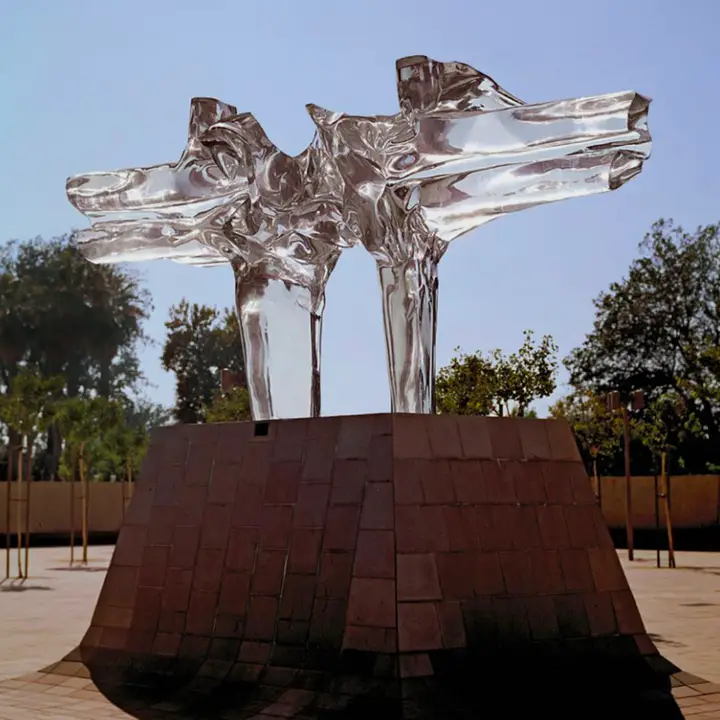
Apolymon
Credit as documented: Bruce Beasley
Apolymon emerged from Bruce Beasley's selection in a California state competition in 1968. His transparent model proposed a work whose size required a new approach to casting acrylic. DuPont donated material but declined technical assistance, leaving Beasley to develop the process himself. His chronology places that development in 1969 and the finished sculpture's unveiling at the State Capitol in 1970.
Already working on a project?
Adds directly to your existing saved project and keeps its brief intact.Documented work. Current availability, ownership and installation requirements must be confirmed with the artist.
At a glance
- Year / version
- 1970 (unveiled; selected 1968 and casting process developed 1969)
- Materials
- cast acrylic
- Documented setting
- unknown
- Dimensions
- Not documented
- Dimensions apply to
- Not documented
- Availability
- Unconfirmed
Places & versions
Installation history
Historical presentations. A past installation does not establish the current location or suitability for a new site.
1970 (unveiled; selected 1968 and casting process developed 1969)
California State Capitol, Sacramento, California
Materials and construction
The production account describes pouring 13,000 pounds of liquid acrylic, allowing it to cure for six weeks, and then finishing and polishing the cast form. That figure measures the casting input, not a verified final sculpture weight. The prolonged cure and subsequent surface work are central to this documented fabrication history; overall object dimensions remain unknown.
From a reference to your project
Keep the idea.
Shape the brief.
Save this reference to your shortlist while you explore. Review your selection, then carry the references you choose into a commissioning brief for your site, audience, timing and open questions.
Your shortlist is saved on this device. Saving a reference does not contact the artist or reserve a work. Participation, availability, price and site suitability need confirmation.
Plan the next step
Sources
- www.brucebeasley.com ↗ · Checked 2026-10-17