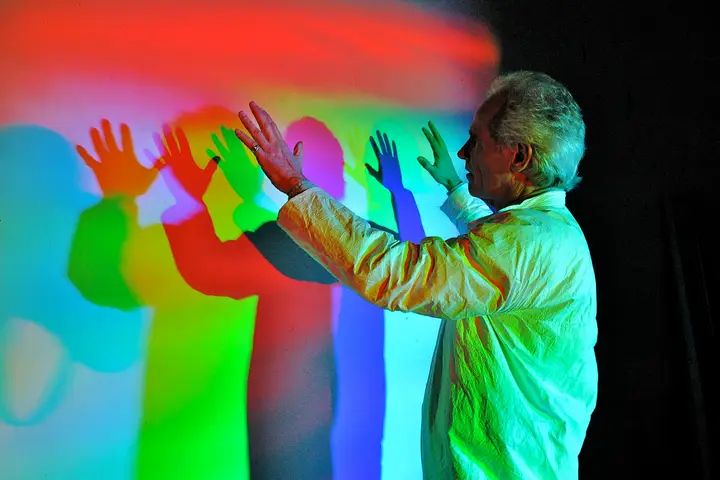
Peter Erskine is the visual artist behind solar-spectrum installations that use sunlight, prisms, mirrors, and architecture. Documented projects include a California library, a Los Angeles police facility, and the Lucy Curci Cancer Center.
Saves on this device.Already working on a project?Adds directly to your existing saved project and keeps its brief intact.
Independent directory profile. Big Art Partners does not claim to represent this artist.
Not documented; confirm with the artist, studio or estate.
Research notes for project planning
What the project record tells us
Solar-spectrum installation integrated into a library
Daylight becomes a changing library material
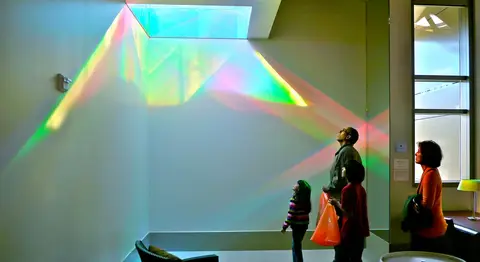
Sun Painting directs sunlight through a shaft in the Lafayette library using mirrors and laser-cut prisms. Erskine describes an installation that changes with weather, season, and time of day. Its architectural dependence is the useful planning lesson: a daylight work cannot be assessed only through a fixed rendering of its brightest condition. BAP could use this precedent to ask for a study of the intended viewing areas across ordinary operating hours, including periods when direct sunlight is limited or absent.
What would visitors encounter through different seasons and under overcast conditions?
Big Art Partners planning prompt
Solar installation serving a police facility’s interiors
The visible effect relies on a roof-to-lobby path
Magic Carpet at the LAPD Valley Traffic Division uses a computer-controlled roof heliostat, a periscope window, and a mirrored shaft to bring sunlight to prisms serving interior spaces. The installation makes a long optical path part of the building. For BAP, that is a reason to define the complete route through roof, enclosure, and occupied rooms at the start of design. Questions about roof access, adjustment, and future building work arise from this documented arrangement; they are not specifications supplied by the page.
How would the building team preserve and maintain the complete optical path?
Big Art Partners planning prompt
Light and shade installations at a cancer center
A healthcare precedent without clinical promises
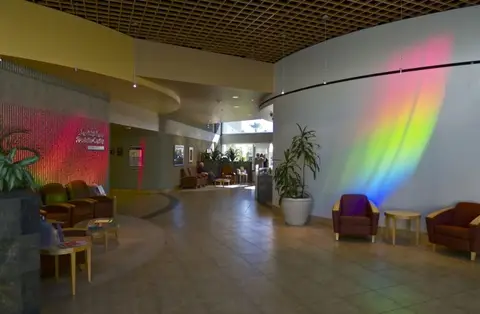
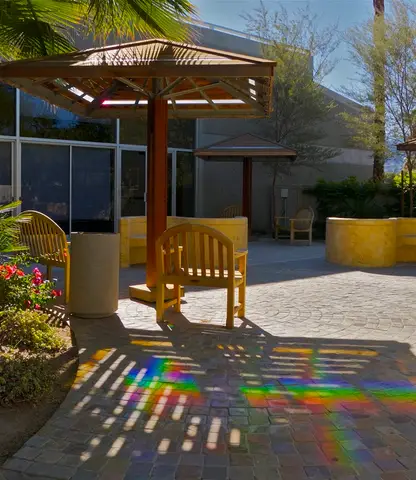
At the Lucy Curci Cancer Center, Erskine describes a tracking mirror outside the building that directs sunlight toward roof-mounted prisms, alongside prism-bearing garden shade structures. These are concrete spatial and optical decisions that can inform a healthcare art brief. The source also uses therapeutic language, but the research does not establish clinical outcomes. BAP can instead discuss the observable experience: the position of colored light, the relationship between interior and garden, and the conditions under which patients and staff would encounter it.
Save this reference to your shortlist while you explore. Review your selection, then carry the references you choose into a commissioning brief for your site, audience, timing and open questions.
Your shortlist is saved on this device. Saving a reference does not contact the artist or reserve a work. Participation, availability, price and site suitability need confirmation.