public art, metal sculpture, architectural metalwork
Based in
Rochester, New York, United States
Profile
individual
Project participation
Not documented; confirm with the artist, studio or estate.
Research notes for project planning
What the project record tells us
2006 zoo commission; historical production duration, not a current lead-time promise.
A destination commission is a long production effort
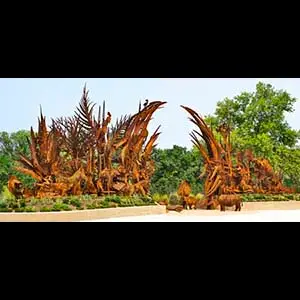
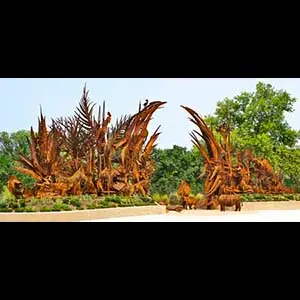
Animals Always at the Saint Louis Zoo combines dozens of animal forms in an extensive weathering-steel composition. Paley’s record dates the work to 2006 and describes five years encompassing design, fabrication and installation. For a destination buyer, this is a useful precedent for discussing complexity rather than treating the finished silhouette as the whole scope. A similar commission should establish how individual forms, overall structure and site construction will be reviewed, and how those approvals connect to the fabrication and installation schedule.
How will component approvals connect to the overall fabrication schedule?
Big Art Partners planning prompt
2003 RIT work; artist’s material and dimensional record.
A campus landmark depends on scale and material
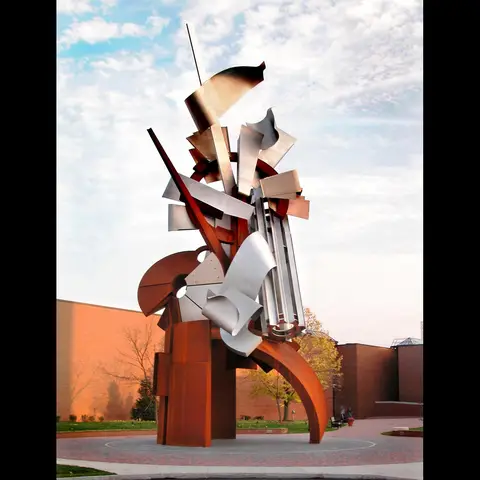
Sentinel at Rochester Institute of Technology is recorded as a 2003 sculpture combining formed and fabricated steel, stainless steel and bronze. Its seventy-three-foot height makes it a useful example for a university discussing a landmark that must read across a large campus space. A buyer should assess such a proposal through actual approach views, nearby building scale and the relationship between the sculpture and its ground plane. Material transitions and maintenance access deserve review alongside the overall composition and structural design.
Which campus viewpoints should govern a landmark-scale proposal?
Big Art Partners planning prompt
1974 object date retained; no claim about current display status.
An architectural commission can change production needs
Paley’s Portal Gates for the Renwick Gallery date to 1974 and combine forged and fabricated steel with brass, bronze and copper. His project account notes that realizing the gates required a new studio, equipment and his first employee. For a museum or architectural buyer, the precedent shows why fabrication planning belongs early in an ambitious commission. Ask how the artist will produce prototypes, handle multiple metals and verify fit at the architectural opening, without assuming a historic production arrangement describes present capacity.
Save this reference to your shortlist while you explore. Review your selection, then carry the references you choose into a commissioning brief for your site, audience, timing and open questions.
Your shortlist is saved on this device. Saving a reference does not contact the artist or reserve a work. Participation, availability, price and site suitability need confirmation.