Research notes for project planning
What the project record tells us
Museum sculpture garden
A lattice changes with the approach
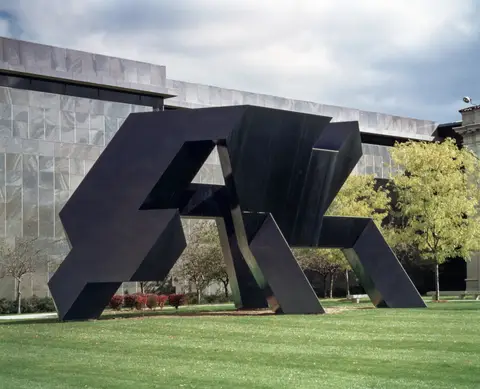
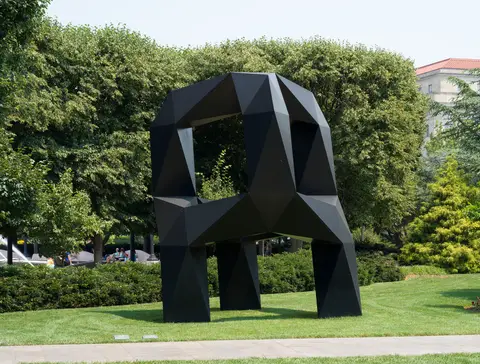
The National Gallery of Art describes Moondog as an open lattice assembled from geometric units, with an appearance that shifts as the viewer changes position. Its painted aluminum structure occupies the museum’s sculpture garden. For a buyer interested in comparable open geometry, evaluate both the sculpture and the background visible through it. Multiple approach studies can reveal whether nearby walls, planting or signs make the internal pattern difficult to read, and help locate places where visitors can pause without blocking the route.
National Gallery of Art — Moondog ↗ · Reviewed 2026-10-10
For your project briefWhich backgrounds and viewing positions make the open structure legible?
Big Art Partners planning prompt Multipart sculpture in a public park
Five elements need a coordinated setting
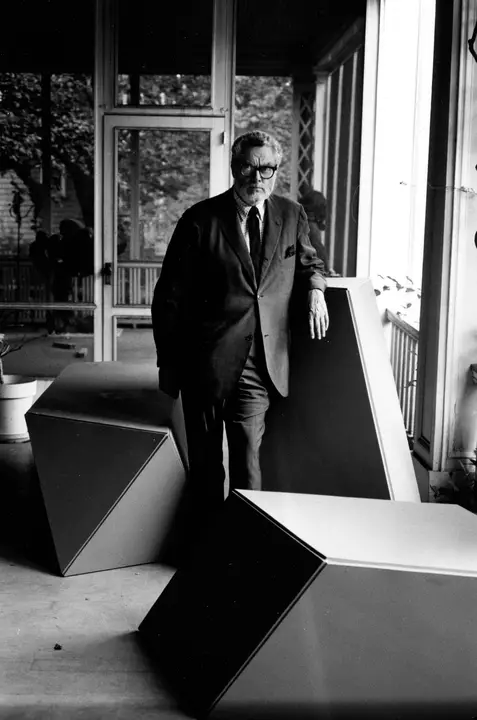
Seattle Art Museum identifies Wandering Rocks as a five-part sculpture dated 1967–74, built from geometric relationships associated with tetrahedrons and octahedrons. The museum connects its arrangement with the experience of a Japanese rock garden. At Olympic Sculpture Park, the separate forms become one spatial encounter. A buyer acquiring a multipart work should obtain the installation plan for the complete group, including intended orientation and spacing, and avoid treating individual elements as interchangeable furnishings that can be distributed independently across a site.
Seattle Art Museum — Wandering Rocks ↗ · Reviewed 2026-10-10
For your project briefWhich arrangement is authorized for the complete five-part work?
Big Art Partners planning prompt Posthumous fabrication chronology
A later fabrication needs its own record
Moondog’s collection entry distinguishes a 1964 model from fabrication in 1998–1999. That chronology is especially important because Smith died in 1980: the date of an artist’s design alone cannot explain the history of a particular physical object. For an acquisition, request documentation of the version, fabrication and authorizing parties. The same information should inform labels and institutional records, so visitors can understand how a work conceived during the artist’s lifetime came to occupy its present public setting.
National Gallery of Art — Moondog ↗ · Reviewed 2026-10-10
For your project briefWhat documentation connects this fabrication to the artist’s design and authorized version?
Big Art Partners planning prompt