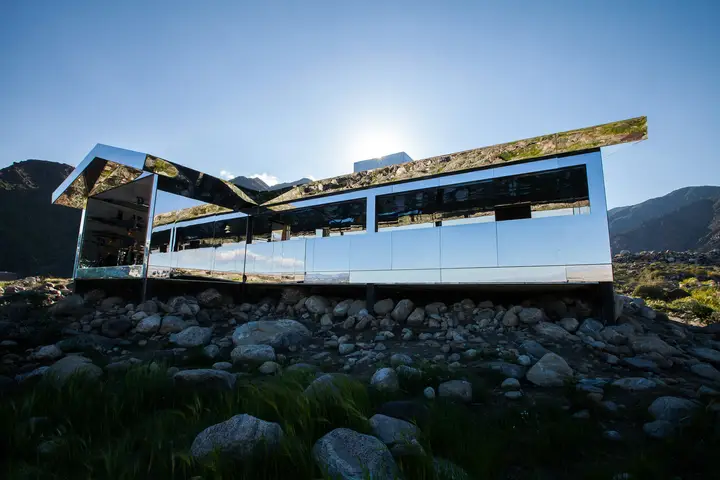
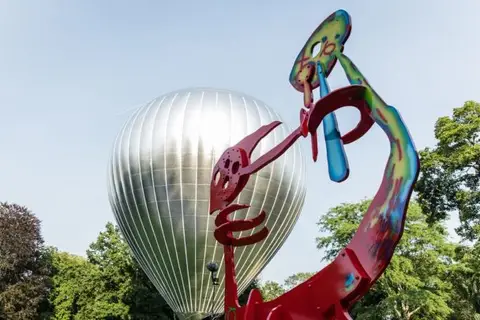
Doug Aitken works with moving images, sound, installations, and architecture. Documented U.S. projects include sleepwalkers on MoMA’s exterior, the responsive media facade MIRROR in Seattle, and the traveling Station to Station project.
Saves on this device.Already working on a project?Adds directly to your existing saved project and keeps its brief intact.
Independent directory profile. Big Art Partners does not claim to represent this artist.
Representative artist / studio imageImage: 303gallery.com ↗Photo by Dakota Higgins and Doug Aitken Workshop (as credited at source)
At a glance
Practice
moving image, installation, public art
Based in
Not documented
Profile
individual
Project participation
Not documented; confirm with the artist, studio or estate.
Research notes for project planning
What the project record tells us
Traveling arts project across U.S. cities
A journey as the presentation structure
The workshop biography documents Station to Station as a 2013 train journey from New York to San Francisco with nine stops over three weeks. That format makes travel and changing audiences part of the project’s structure, rather than simply the means of delivering an exhibition. For BAP, it provides a precedent for discussing a coordinated program across several host sites. The relevant planning distinction is between the artistic continuity of the journey and the separate local arrangements needed at every destination.
Which responsibilities would belong to a central producer, and which would be carried by each host?
Big Art Partners planning prompt
Exterior moving-image commission at MoMA
The museum exterior becomes a viewing surface
MoMA’s historical page records sleepwalkers in 2007 across seven exterior facades, with the work visible from surrounding streets and the sculpture garden. The installation placed filmed urban lives into the city’s own evening environment. This is a useful precedent for a BAP conversation about where an audience actually stands and how separate projections are understood together. It also suggests assessing neighboring light, viewing distance, and the timing of the presentation before treating a facade as an available screen.
Where could visitors safely see and understand the projected sequence from the public realm?
Big Art Partners planning prompt
Responsive architectural media at Seattle Art Museum
A facade with an ongoing software component
Seattle Art Museum identifies MIRROR as a 2013 installation whose custom software continually recombines video in response to environmental information. The collection record specifies color imagery without sound. This makes the work a useful example of a commission whose behavior depends on an operating system as well as a physical display. BAP’s planning discussion could therefore address responsibility for the software, the relationship between inputs and visible output, and how the work should be documented when equipment or surrounding conditions change.
Save this reference to your shortlist while you explore. Review your selection, then carry the references you choose into a commissioning brief for your site, audience, timing and open questions.
Your shortlist is saved on this device. Saving a reference does not contact the artist or reserve a work. Participation, availability, price and site suitability need confirmation.