Research notes for project planning
What the project record tells us
Modular interactive instrument; museum and institutional installations
Sympathetic Resonance: a musical work with reconfigurable units
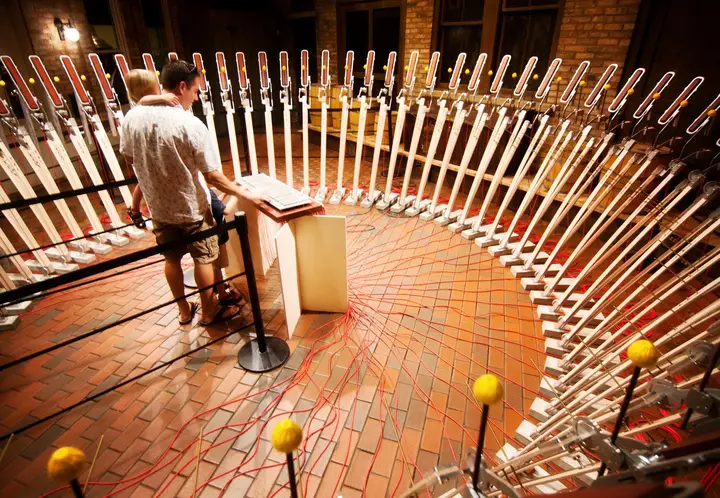
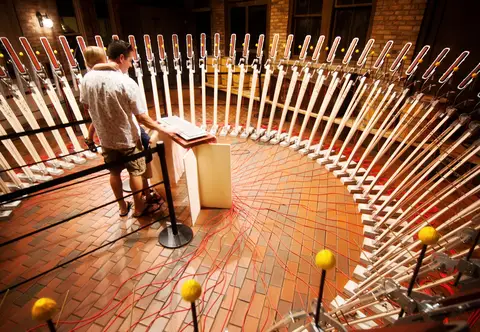
Kirsch's Sympathetic Resonance uses 56 separate note units and a touch-sensitive aluminum keyboard to create a playable marimba-based sculpture. Each unit combines a marimba key, yarn mallet and rotary solenoid. The artist explains that units can sit on the floor or mount to walls, allowing the arrangement to change between installations. Documented presentations include Grand Rapids Public Museum and The Tech Museum of Innovation. This makes the project a useful reference for participatory sound distributed through a room.
Joshua Kirsch — Sympathetic Resonance ↗ · Reviewed 2026-10-10
For your project briefHow would an installation lay out the keyboard, note units and cabling while managing reach, acoustic spill and maintenance access?
Big Art Partners planning prompt Interactive light sculpture, 2015
Concentricity 96: a hand-operated light mechanism
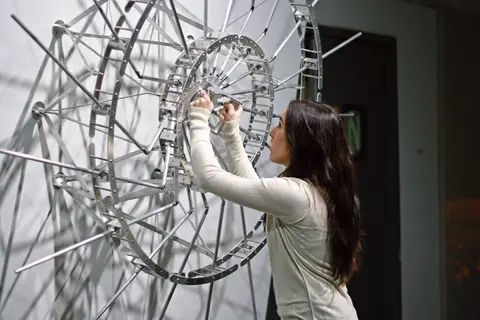
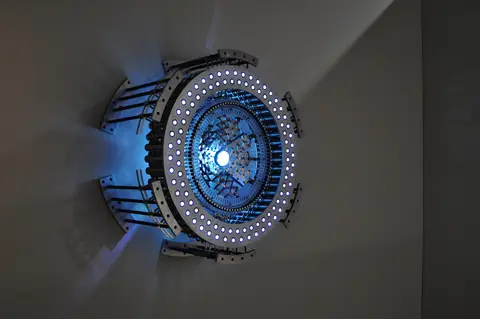
The 2015 Concentricity 96 translates a visitor's movement of a central illuminated handle into LED patterns. Kirsch describes a magnet and reed switches sensing movement, with twelve hinged mechanisms allowing the handle to travel in multiple directions. Ninety-six red-and-white LED arrays and illuminated acrylic circuit boards respond. The listed materials include aluminum, acrylic, stainless steel and electronics. This is a documented example of physical interaction producing a visible response without requiring visitors to use a phone or separate screen.
Joshua Kirsch — Concentricity 96 ↗ · Reviewed 2026-10-10
For your project briefWhat mounting height, approach space, demonstration and servicing arrangements would allow visitors to use the moving handle as intended?
Big Art Partners planning prompt Floor-to-ceiling interactive light sculpture, 2007
Concentricity 16: a room-spanning variation
Concentricity 16 is the floor-to-ceiling member of Kirsch's interactive light series, documented in 2007. Its sixteen green-and-white LED arrays can be viewed from either side; a movable handle, magnet and reed switches drive the response. The artist describes an adjustable height, while listing a 15-inch width and 13-inch depth. It provides a distinct spatial precedent from the larger array-based Concentricity 96, but the page does not supply structural attachment details or a certified range of installation heights.
Joshua Kirsch — Concentricity 16 ↗ · Reviewed 2026-10-10
For your project briefWhat ceiling and floor conditions, accessible approach and supported height range would the artist verify for the particular room?
Big Art Partners planning prompt